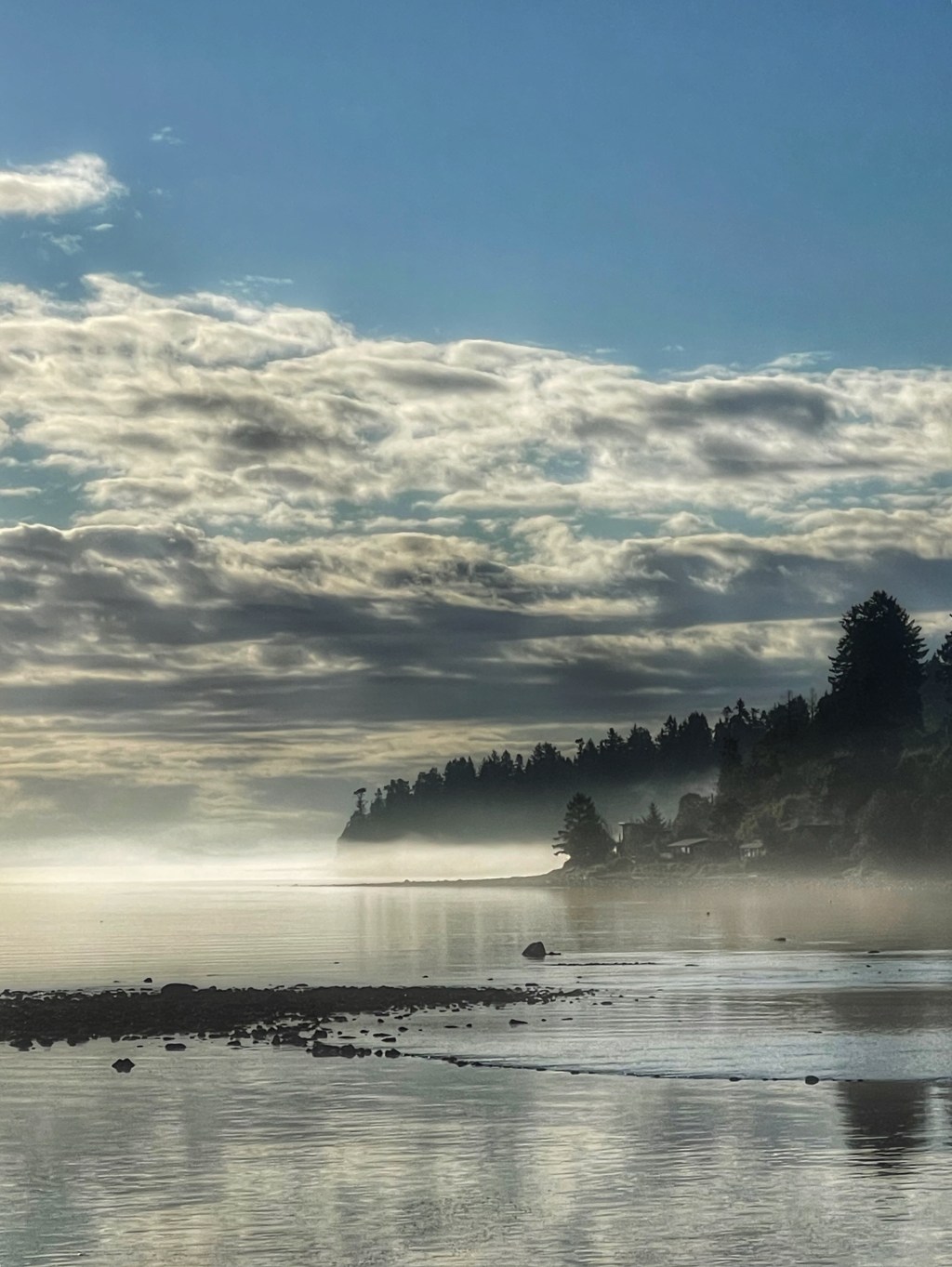
Ainsley Althouse was ten and she’d been coming to Deep Bay all her life. First time was when she came to visit her Grandpa and Nona but then sometime around 2016 her parents bought a place of their own. She was four and she would come with her mom and dad and later with her younger brothers Zack and Linden and they would spend endless hours exploring.
But today she was by herself doing one of her favourite things; daydreaming about her life and what lay ahead. She was walking down toward the spit at Deep Bay, past the huge cement block where the herring cannery had been, way back when before it burned down in 1937. Ainsley’s grandpa had told her how Japanese families had come to Deep Bay over a hundred years ago to fish for herring. He’d told her there were so many herring back then that you could walk across the water, which Ainsley found hard to believe but it didn’t stop her from imaging how amazing that must have been. All that was before the fish cannery had burned down and before the war when all the Japanese were interned in camps.
She loved it when Grandpa told his stories. He’d been coming to Deep Bay since he was five, over sixty years ago, and he could spend hours telling stories around a campfire after dinner. He would come here with his father who was a commercial fisherman. It was a hard life but he could tell stories about Deep Bay that were thrilling to hear. When he was telling his stories Ainsley would sometimes close her eyes and try to imagine a young Japanese girl just like her, exploring the bay. Ainsley could see Denman Island when she walked down the spit and where the logging camps had been on the other side of the harbour, where they loaded the logs onto trains. She knew things had changed a lot over the years and that trains didn’t even run anymore on Vancouver Island but she could always walk to the end of the spit and imagine what it must have been like, so long ago.
Grandpa had told her about a huge earthquake in 1946 when the ground she was walking on split apart and dropped over eighty feet. It must have been terrifying when it happened and she wondered if any young girls like her had been hurt, or their families.
So many people have lived here she thought and everyone of them had stories to tell. As she walked slowly down the spit a beautiful waft of fennel distracted her. Grandpa said the fennel was left behind by the Japanese families who came to Deep Bay for the herring. Fennel, he said, was one of their favourite flavours for cooking and every time he walked down to the spit past the fennel bushes he thought about them. Ainsley loved that story. Some of the bushes grew to be taller than her and she loved standing among them all and looking up to the sky through the canopy of light yellow blooms. The aroma always reminded her of licorice, one of her favourite treats. And sometimes she would just stand there with the fennel waving gently in the sea breeze and if she concentrated hard enough she could imagine a young Japanese girl doing the same thing so long ago.
Sometimes Ainsley would wake up in Deep Bay, collect her brothers Zack and Linden and go out into the tidal pools right out front of their place and play for hours picking up crabs, splashing each other and shrieking with delight if they saw a fish caught in the tidal pools. Grandpa had told them about a young boy who had picked up a thirty two pound Coho Salmon with his bare hands. It had been trapped by the weir. They knew that the weir between the two tidal pools had been built by First Nations people hundreds of years ago and every once in a while she and her brothers would pick up heavy rocks and pile them on top of the weir.
One night Grandpa had told them all a story about how the weir was made and about the tribal people who came every year to the bay for the fishing. Ainsley would close her eyes and try to imagine what that would have been like for kids like her and her brothers. And she loved walking out to the wide sandy beaches when the tide went way out. They could get there quite easily now after her own father, Steele Althouse, had made a pathway by clearing big heavy rocks all the way to the sand. They called it Steele’s Highway and Ainsley wondered if it would last for so long, just like the weir had.
She found herself thinking about maybe when she had children and how she would tell them stories about Deep Bay, and the weir, and young kids just like them who’d come here before them, and about fennel and Steele’s Highway, the path their grandpa had made and about all the other stories she would learn around the campfire.
Ainsley loved it all. She loved to think and reflect about this place they called Deep Bay, wondering if girls like her had been here hundreds of years ago, and trying to imagine what their lives would have been like. And she wondered what Deep Bay would be like in another hundred years and if any young girls would walk on the spit and dream about their lives, just like she loved to do.
One thing Ainsley knew for sure; she loved listening to stories and and telling stories and thought quietly to herself that maybe one day that’s what she would do. Maybe she would even write stories for people to read.
After a couple of hours Ainsley wandered back to camp. Her brothers Zack and Linden ran up to her, both of them excited,
“Ainsley, do you want to go out in Grandpa’s blue boat?”.
 Tony with a capital T
Leave a comment