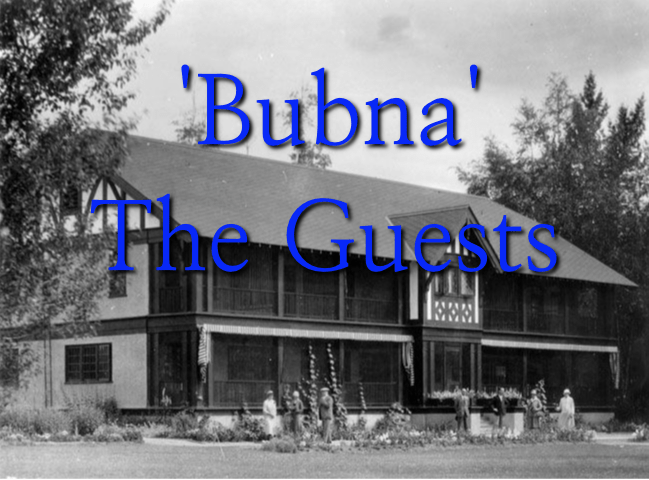
This is an excerpt from ‘Bubna’ a novel I am writing. It’s an historical fiction about the life of Countess Bubna-Litic, an English blue blood who came to Canada in 1914. She was one of the most eccentric women ever to have emigrated to Canada. The Countess eventually settled in Kelowna BC where she built the Hotel Eldorado on the shores of Lake Okanagan. It was an astonishing achievement, the first destination resort hotel built in the Okanagan, deep in BC’s hinterland some four hundred kilometres from the west coast. Divorced, eccentric, a feminist and vastly wealthy the Countess was not to be trifled with.
On a beautiful summer day the Hotel Eldorado opened. BC’s most influential social and political leaders had trekked to Kelowna for a week of festive celebration, to mark the opening of an extraordinary grand hotel. It had been built in the English Tudor style. On the final afternoon guests gathered outside to celebrate the Eldorado Garden Party and Evening Soiree, which was to end with a climactic fireworks display lighting up the Okanagan summer night sky.
It was 1926.
Colonel Van der Pleet arrived for the Grand Opening on horseback astride his magnificent black stallion Tiberius, wearing the full dress uniform of a member of the Russian royal family. He was one of the most eccentric guests but one of whom The Countess had grown quite fond.
“My dear Colonel Van der Pleet, you do me a great honour by your presence.”
“Countess Bubna you have done us all a great honour with yours and in building this magnificent hotel, your Hotel Eldorado. I shall write to my European friends and urge them to summer here.”
The Colonel had the ramrod imperial presence of a man born into his station, a world that had been turned upside down during the Bolshevik revolution in 1917, an uprising the Colonel had done well to survive. The entire Russian royal family, the Romanoff’s had been killed in Yekaterinburg. He knew them well, his family regular guests to the Tsar Nicholas’ summer palace. In 1917 that had all changed, everything they had ever known changed, seemingly overnight. He and his family had been hunted across Russia and they’d been lucky to escape in the boxcar of a cattle train on its way to Poland. From there they travelled to London.
“Most dufficult times they must a’ been Colonel.”
It was Hamish McDougall, the Countess’ Scottish companion.
The Colonel looked up at the burly Scot.
“I still find it difficult. Lenin and his Bolshevik gang of thugs slaughtered us all, my family, the Romanoffs. And for what? And why the children? I was playing with Princess Anastasia just one week before they shot her dead. She was beautiful and tender and would not have hurt a fly. I am haunted by thoughts of the terror she must have felt in those last moments. I had no idea such hatred roamed our land.”
“I can only offer condolences Colonel and just imagine the challenges you have had in the years since. How did you end up in this wee town?”
“I am pleased to share my story Hamish. It does me good to tell it.”
Both men sat on wicker chairs on the hotel veranda looking out on sweeping views of Lake Okanagan.
“It is odd to be sitting here in such a beautiful place in a country so young and so untouched by war.”
“But Colonel we have lost many Canadian men in this last war, the best we had, gone too soon. And that followed on by influenza. We are all fortunate.”
“Oh of course Hamish, don’t let me be clumsy about that, a terrible toll we all paid the world over. What I meant to say though is how fortunate you are to be living in a country as beautiful as this which has not been ravaged by war in the ways that all European countries have. And it is something to do with why I am here.”
“You could have stayed in England, could you not?”
“Yes, of course, quite easily. We had foreseen the troubles coming and had ensured that our accounts were held in reputable banks in Paris and London. We had also prepared for the worst by lining our clothing with gold coins, sufficient as it turned out to pay for our way out of Russia and over to England.”
Hamish pressed.
“So you still leave me wonderin’ how yu ended up in this wee town?”
“It would have been easy to stay in London. We have many royal relatives there but we had tired of that world and perhaps grown weary of it. I read an advertisement by the Kelowna Land and Orchard Company in the ‘Times of London’, calling for immigrants and offering very affordable arable land in the Okanagan Valley. It appealed to me. The fresh start, the opportunity, a young country full of dreamers, its best years ahead, and the adventure of it all. I thought it could be just what I needed. It turns out my Scottish friend, that it is.”
“And how do you find life here. It must be an extraordinary change for you.”
“Well, at first glance it seems a simple little town, one that would typically attract a wide cross section of backgrounds. Some seeking new opportunity, some a new world, others perhaps running away but I must say it is a fascinating mixture of people from all over the world. I dare say most of them are attracted to this young, raw unspoiled country, yearning to see if it can fulfill their unfulfilled dreams.”
“Colonel, let me introduce you to Mr. McCulloch, an engineer of some reputation.”
The Colonel turned to Hamish, with a smile.
“How many of you Scots are there. You are most certainly making your mark.”
Andrew McCulloch had arrived at the Hotel Eldorado in his new motorcar. He lived in Penticton about thirty five miles south of Kelowna and had been excited at the prospect of taking his brand new Rolls Royce Phantom 1 for a long drive. He knew his arrival would cause quite a stir as it drove up to the celebration.
McCulloch was the Scottish engineer credited with completing the Kettle Valley Railway through some of the most difficult, mountainous terrain in southern British Columbia. It had been chronicled as one of the great engineer feats in Canadian history although it took a terrible toll on largely immigrant workers, thousands of whom were injured or did not survive at all.
“Mr. McCulloch how pleased I am to see you here today and my haven’t you created quite a stir with your wonderful new motorcar. You must take me for a drive.”
It was the Countess.
“Well thank you Countess, it is indeed an honour. I truly believe that one day the automobile will surpass the railroad as the most important means of transportation but not of course until we have thousands more miles of roads to travel. That will come though, mark my words.”
“Mr. McCulloch how good it is to see you.”
John Oliver was the Premier of the province.
He extended his hand.
“You know McCulloch, I know you have taken sharp criticism for the number of workers who died building your railway, most of them Chinese if I’m not mistaken but I do think the KVR has stopped our American friends south of the border from thinking that the Kootenays were ripe for the picking. The government in Washington DC had been encouraging expansionist ideas. Bloody hell man, don’t they remember when they flooded across our border in the 1860’s after gold was discovered in the East Kootenays.”
McCulloch nodded.
“Aye Mr. Oliver our own government was very slow to deal with it. I mean in fairness they did have a few things on their hands. They were preoccupied with creating the Dominion of Canada in 1867, they struck a deal with British Columbia in 1871 to join the Confederation and another deal with the CPR to build the longest railway in the world which stretched clear across the continent.”
Oliver continued.
“Your railway Mr. McCulloch, the KVR, put paid to any plans those damn yankees may have had. For the first time we could be in full control of our province. ”
Hamish returned with cold beer for the men.
“Gentlemen, this might quench your parched throats. Where are you living these days Mr. McCulloch?’
“Thank you Hamish and congratulations on your fine hotel. I know the Countess could not have succeeded without you. I’m living in Penticton. It is a fine town indeed. I think I’ll live out my days there, I can think of no prettier town in Canada. Of course I spent many years in Penticton when I was charged with building the railway. The leaders of the town agreed to give the company twenty acres of land on the lakeshore and a twenty year tax exemption for the KVR so I do have a soft spot for the community.”
“It must have been difficult Mr. McCulloch, difficult to build.” Hamish had heard stories from many workers who had quite literally survived their time building the railway.
“The greatest challenge I ever faced Hamish. Rugged terrain, untrained workers, avalanches, snow so deep it would bury entire trains, rock falls, wildfires and train wrecks, so many workers injured and worse. It was endless but in the end we found a way through it all. I’ll never forget the day the trains ran. It was May 31, 1915 and over 1,500 people showed up to greet that first train from Midway. It was a big, big deal. That was over half the population of Penticton.”
McCulloch looked up at the beautiful hotel behind him.
“But Hamish I’ve had my day and received my share of honours. This is your day and I can see you know what can be accomplished when you put your mind to tough tasks.”
John Oliver had never seen a Rolls Royce Phantom 1 before.
“That may be the most spectacular motorcar I have set my eyes upon Mr. McCulloch. If I may so without being overheard by the Countess your automobile has the lines of a beautiful woman.“
McCulloch laughed.
“Well even the Countess is an admirer of beautiful things. I suspect she would agree with you Mr. Oliver. She has 100 horsepower and can reach speeds of 80 miles per hour, though the roads we have to travel on in the Interior leave a lot to be desired.”
“But Oliver, you know of which I speak. You live in Oliver just south of Penticton. I remember when you were the mayor of that wee town and developed your irrigation system for the orchards. But now your are the Premier and in a much different position of authority. Can you not see that the future of this province with all of its providence, its bounty and natural resources, the future is with the automobile? That will not happen until thousands of miles of roadway are built. I met with Henry Ford not so long ago. He understands that better than any man in the world. When automobiles are widely available, when the industry is truly democratic every man in Canada will be able to drive where ever he wants to or needs to. It will singlehandedly change our country.”
“Mr. McCulloch you speak with passion and singular vision, it is compelling but as with most things in government this too will take time. Perhaps we might discuss a role for you in my government.”
‘Bubna’ will be published in 2025.
 Tony with a capital T
Leave a comment