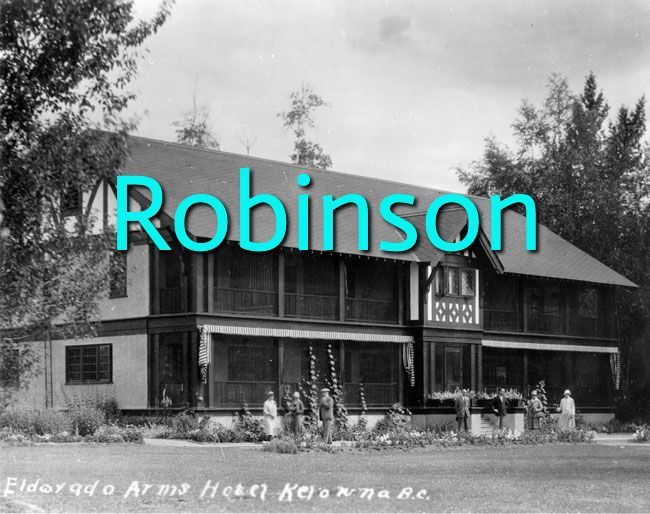
Author’s note: The Countess Bubna-Litic was without a doubt one of the most compelling characters Kelowna BC has ever known. Her legacy began with the opening of the Hotel Eldorado in 1926. It was unlike anything ever built before in this small interior town, a destination resort hotel. She had emigrated to Canada as World War 1 began single, eccentric and vastly wealthy. She lived an extraordinary life and left a huge impact on the story of the Okanagan Valley. I am writing a novel, an historical fiction.
‘Bubna’ will be published in 2025. This is an excerpt.
The Countess was restless. They had been back in Alberta three years since the trip to the Shuswap. It was 1919. The ‘war to end all wars’ was finally over and the world had survived a global influenza epidemic, the two historic events taking an unimaginable toll worldwide, wiping out entire generations. Optimism was in short supply. The cattle business had continued to thrive adding to the Countess’ vast wealth but as challenging as it was, it was not enough. She wanted more.
“What is going on with yuz wee hen?”
Hamish knew the Countess was bursting to talk with him about her hotel idea.
“I need to know more about Kelowna and the Okanagan Valley.” she announced. “I have so much to find out before we can even think to build my hotel. Where should I build it? How do we build it? Where will we get workers? How harsh are the winters in that valley? What about the summers? Or should we build it in the Shuswap?”
“Slow down Countess. We need to visit the Okanagan Valley before you can make any final decision. That’s where you’ll find the answers to your questions. Mind, you’ll find those answers and a hundred other questions as well.”
“My banker at the Bank of Montreal in Calgary has a home in the Okanagan. I had no idea. He says it’s just south of a small town called Summerland. I told him I want to build a hotel in the valley and to my great surprise he was very enthusiastic about it all. He thinks the future will be very prosperous and and he has extended an invitation to stay at his home if we do travel out there.”
Travelling to Kelowna and the Okanagan Valley was no small task. The town had been incorporated in 1905 and it was small, home to around five thousand residents. Some had thought a townsite in Benvoulin, closer to the Kettle Valley Railway as it was, would have been a better location for this new town but Kelowna had one obvious advantage, it was sited on the shores of Lake Okanagan. Paddlewheelers already carried goods up and down the lake and the Canadian Pacific railhead in Vernon meant that goods could be delivered to other markets quickly and affordably.
In the spring of 1919 a letter arrived. It was addressed to ‘The Countess Bubna-Litic’ and postmarked ‘Kelowna BC’. The Countess was intrigued.
“Who could possible know me in Kelowna, Hamish?”
She opened the correspondence.
“Dear Countess Bubna-Litic,
Please forgive my formality it is just that I do not know how to properly address you. My name is John Moore Robinson of Naramata BC.I have been given your name by a mutual acquaintance, Mr. Jonathan Halderson of the Bank of Montreal. He is my banker and over lunch during a visit to Calgary recently your name came up. If I may say so he is quite taken with you. He told me that he had never met a lady quite look you before and thought you and I should meet, if at all possible.
I have lived in the valley for some twenty years now and been very involved in establishing a number of townsites, all of which are thriving. I’m currently living in Naramata which is a small village I’ve incorporated south of Kelowna on the shores of Lake Okanagan. If I may be boastful for a moment, it is where the most delicious peaches I have ever tasted are being grown. I have plans to ship them to England. I am also experimenting with some European grape seedlings I have brought over from France. I know we are northerly but I want to see if we can grow wine grapes in this region.
But I digress, that is not my purpose in communicating with you. I understand that you may be travelling to the Okanagan this summer with an idea to find a suitable site to build a hotel. I believe I may be of assistance to you.
Yours truly
John Moore Robinson”
Hamish had heard enough.
“Well then wee hen, we had best start planning.”
John Robinson greeted the Countess and Hamish. The girls Olga and Ina seemed to be very excited and Olga could not hold her tongue.
“Oh mummy have you ever seen such a beautiful place. We must move here, we must.” They had travelled by train through to the railhead in Vernon at the north end of Lake Okanagan and then by paddlewheeler to Kelowna about thirty five miles south.
“Welcome to God’s country Countess.”
It was John Robinson.
“Thank you Mr. Robinson I must say it is truly beautiful and the climate is most agreeable. The air is warm and dry. It is hot today but I am most comfortable.”
“Your first impression is most often that one that remains. I am pleased to hear yours. Now have much to show you but I think it would be best to travel to Summerland first. I understand Mr. Halderson has extended an invitation for you stay at his home.”
The Countess had known of Mr. Robinson for some time as word of his exploits in the Okanagan Valley had been widely chronicled in London and in Alberta. Crates of the most delicious peaches and fruits from small towns like Summerland, Peachland and Naramata, all of them mapped out and established by Mr. Robinson, had been shipped throughout the British Empire and were now widely anticipated each season. Okanagan Valley Apples, Buffalo Apples, British Empire Peaches, the Canadian Tree Fruit Company and many others were eagerly sought after in European cities.
What the Okanagan Valley had was land, arable land but what it needed was people. Land development companies advertised in the Times of London, enthusiastically describing exciting opportunities to emigrate to the Okanagan Valley in Canada. The Kelowna Land and Orchard Company and the Belgo Land Company told a war weary Europe of golden and affordable opportunities to buy land and begin a new life in an exciting young country, left relatively unscathed by the terrible war.
It was no small task shipping tree fruit to England and ensuring that the fruit arrived safely. Robinson was proud of it all.
“I had a very difficult time in the beginning. Nothing like this had ever been done. At the time, I didn’t know what I didn’t know so I was not to be deterred. It was just as well though, I’m not sure I would have persisted had I known the barriers I would face. It was just like your beef cattle Countess. The appetite for high quality Canadian beef over there is insatiable and now they are clamouring for as much fresh Okanagan Valley fruit as I can deliver.”
“You have done so well Mr. Robinson and I think as well you have raised the profile of this most beautiful valley.”
“Countess I wager that you are about to do the same thing, if I understand what I am told about your idea to build a grand destination hotel in these parts.”
Hamish had been unusually quiet.
“The lake is bonnie indeed but the terrain is quite barren and dry, t’ain’t it? It can’t be an easy place to grow fruit. How do you get water to these orchards I see everywhere?”
“That is indeed a good question Hamish. It remains the single greatest challenge we have. Do you see that network of wooden flumes up in the hills? They carry the water for many miles to the orchards. Honestly the birds must think it’s some great spiders web criss crossing the valley. We’ve even had to hire a Flume Manager to ensure they stay in good repair. These modern times call for modern thinking.”
By the time the’d arrived at Mr. Halderson’s home near Summerland the Countess and Hamish were feeling overwhelmed by everything they had seen. It was like finding a magnificent untouched part of the world, all set against the backdrop of a beautiful lake some ninety miles long. Over dinner the Countess excitedly described her dream.
“I am now more certain than ever that this valley is where I must build my hotel but I do not now have the same certainty as to where. I have been told I must look closely at Kelowna but now that I’ve seen Peachland and Summerland I am not as sure where I should build. This is doubtless the most beautiful part of this country as I have ever seen. Indeed it would challenge many of Europe’s finest destinations for its natural beauty.”
Mr. Halderson spoke up.
“Countess I am but one man but if I may I believe that Kelowna is where you should build your hotel. And this is not advice I give lightly. You have graced my bank with your accounts and it is with some risk I speak up. Kelowna is a young town as of yet and indeed will go through growing pains but of all the places in the valley, Kelowna is situated most beautifully, easily accessible by paddlewheeler and close to the railhead in Vernon. My work at the Bank of Montreal gives me some insight into the investment market and I can tell you that people and corporations with a great deal of money have their eyes on the Okanagan Valley and Kelowna. If this province continues to build a network of roads from Alberta and Vancouver I believe it will lead to a boom and prosperity for all. Indeed the bank itself has plans to build a most beautiful house in Kelowna for our manager there. It will be called ‘Hochelaga’ the Indian name for Montreal.”
A few days later the Countess, Hamish and the girls arrived back in Kelowna. An automobile had been arranged by Mr. Halderson.
“Oh Hamish I am absolutely beside myself with the excitement of it all. A few short weeks ago it was but a dream I had but now I know it will be real.”
“Aye Countess, this town is rarely blessed. Land is abundant, soil is fertile and the sunny weather a joy for a Scot who now calls Alberta home. We should build close to the shipping docks down near the foot of Bernard Street, where most of the commercial buildings seem to be. That’s where they ship off all the fruit and the tobacco they grow here. Everybody who visits the town will come through there.”
“No Hamish, absolutely not!”
When the Countess spoke with that tone he had learned to hear her out.
“My grand hotel is going to be nowhere near the town. I want to find a place a few miles from here, close enough to get our supplies but far enough away so that our guests feel completely isolated. They will be here to get away from it all. We’re going to make sure it is like nothing they have ever experienced before.”
“Oh Olga, this must mean we’re going to live here.” It was Ina. “Isn’t that exciting.”
“It is every wish I have ever had in my whole life.” Olga had always had a fancy for exageration “If we live here Ina, I vow I shall never leave. Where elso could be more perfect?”
By the time they boarded the train a few days later at the railhead in Vernon the Countess could barely contain her own excitement.
“Oh Hamish, won’t it be exciting. The land you showed me just south of Mission Creek will be perfect for the hotel. Mr. Robinson says that area is called Okanagan Mission. He said it was named thus after the work of Father Pandosy, a Jesuit priest who settled in the area over sixty years ago. How astonishing he must have been.”
“Aye Countess but you know do ya that building it aways out of town will present some challenges we wouldn’t have it was closer in.”
“Yes, Hamish my magnificent companion and that is where you will show your real worth. So let’s get back to Alberta and start planning out how it is all going to happen.”


 Tony with a capital T
Leave a reply to Dar Cancel reply